
What Does Expressive Arts Therapy Look Like Online?
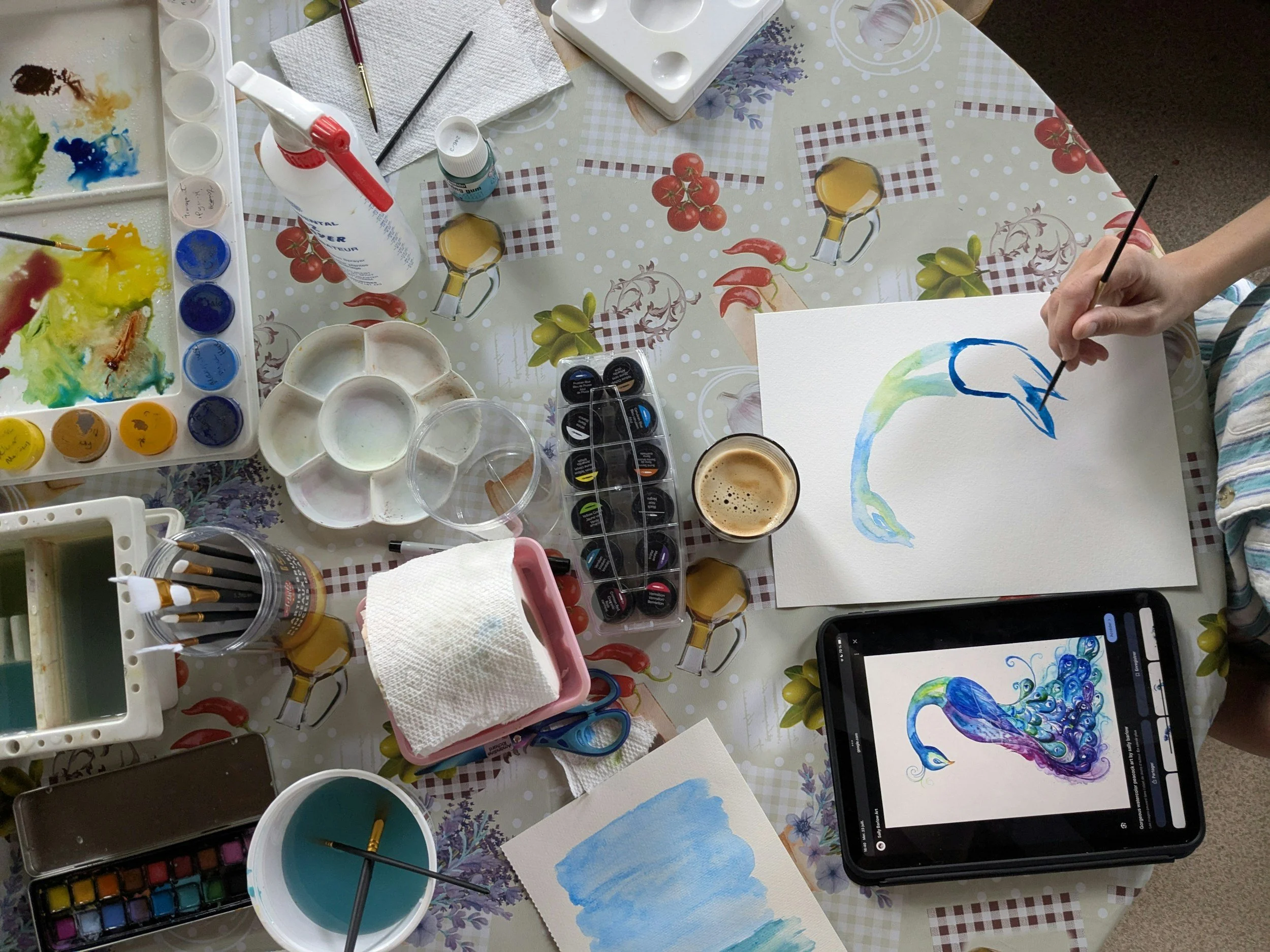
What Is Expressive Arts Therapy?
Before we get into how online expressive arts therapy looks, we need to break down what expressive arts therapy is. Expressive arts therapy is an intermodal approach that integrates creative modalities such as visual art, music and sound, writing, movement, storytelling, guided imagery, or drama into therapy. Expressive arts therapy may move between these modalities during a session or even use multiple modalities at the same time. For instance, we may be creating a piece of visual art while listening to music.
The point of expressive arts therapy isn't to be "good" at whatever we're creating. The point is the process of creation. How did it feel in the moment to try something you hadn't before? What was going on in your body and mind while you made an image or put marks on a piece of paper?
Expressive arts therapy gives us a space to really delve deeper into things when words have failed. Maybe we've been talking about the same thing over and over in therapy and it feels like we're stuck and can't move past something. Integrating expressive arts can help us access something different and create movement where words alone haven't quite gotten us there.
Common Misconceptions About Online Expressive Arts Therapy
Often, expressive arts therapy is not as scary or intimidating as it may seem. There are many common misconceptions about online expressive arts therapy.
The first one I hear frequently is, "I'm not artistic."
You do not need to be an artist to be expressive. All you need is the willingness to try something different. You're already here considering therapy, which is a huge act of bravery in itself.
Another common misconception I hear is, "I don't have any supplies."
No problem! All we really need is our imagination. Maybe you have a pen and a notepad, a sticky note, or a piece of printer paper. And if you don't have that, we can explore movement, storytelling, music, drama, or guided visualization instead.
The last misconception I hear is, "Virtual therapy isn't as effective as in person."
Research suggests that virtual therapy can be just as effective as in-person therapy for many mental health concerns (Shaker et al., 2023). In fact, virtual therapy may be even more beneficial depending on your lifestyle. Maybe you need more flexibility because of work, family responsibilities, or living in a rural area with limited access to providers.
What Happens During an Online Expressive Arts Therapy Session?
So what actually happens during an online expressive arts therapy session?
Typically, like with any other therapy modality, we'll start with a check-in and establish the focus of the session. Maybe it's something you've been struggling with this week, or perhaps it's something broader that's connected to your therapy goals.
Then we get to begin the fun stuff.
This is where we start our creative exploration and engage in whatever expressive activity feels right for the session. This could be drawing emotions or experiences, journaling, writing poetry, listening to music, or integrating some gentle movement to check in with our bodies.
Once we break it down, it's really not as overwhelming as it may seem.
After we've engaged in the expressive activity, we'll check in again and reflect on the experience. Was it helpful? Could you use it outside of session in your daily life? How did this exercise connect to your therapy goals? These are just a few of the questions we may explore together.
Benefits of Online Expressive Arts Therapy
As I mentioned before, virtual expressive arts therapy comes with some unique benefits. These include increased accessibility, greater comfort, and easier integration into daily life.
Virtual therapy allows clients to access services wherever they may be. Maybe that's during your lunch break at work, from your parked car, or curled up on your couch at home. Virtual therapy works around your life and schedule.
You don't have to worry about commuting to an office, dealing with traffic, navigating bad weather, or squeezing another appointment into an already busy day.
You also have the convenience of participating in therapy from a space where you feel most comfortable. That means you don't have to worry about sitting on someone's strange itchy couch or wondering if an office is accessible enough for your needs. Maybe what works best for you is sitting under a weighted blanket with your pet nearby.
Therapy can be hard. We talk about and share some of the most vulnerable parts of ourselves, and you deserve to feel comfortable while doing that.
Virtual expressive arts therapy can also make it easier to integrate creative practices into your daily life because you're already in your own environment. Expressive arts activities may provide opportunities for increased self-reflection, emotional processing, and self-expression. Think of them as tools that can help you gain deeper insight into yourself long after the session is over.
Who Can Benefit from Online Expressive Arts Therapy?
Now that we know a little more about expressive arts therapy, who is it really for?
Many people assume expressive arts therapy is only for children. While children can absolutely benefit from expressive arts therapy, it isn't just for kids.
Anyone can benefit from expressive arts therapy. It can be especially helpful for people dealing with anxiety, stress, grief, loss, or major life changes. It can also be a great fit for those who consider themselves deep thinkers and struggle to find the words when someone asks, "How are you doing?"
And of course, creative individuals who are looking for a more holistic approach to therapy may find this modality especially meaningful.
Expressive arts therapy is for people of all ages. If you can express yourself, you can benefit.
Getting Started
What can you expect if you've never done expressive arts therapy before?
During our first session or intake process, I may ask about what forms of creative expression you already feel comfortable with. Most people have some sort of creative outlet, whether they realize it or not.
As we continue working together, we'll talk about which modalities feel like the best fit for you. Maybe movement and music are your jam and visual art isn't, and that's completely okay.
We work together to figure out what feels comfortable and meaningful for you. Therapy can already feel overwhelming at times. We don't need to make it more difficult.
All I ask is that you bring curiosity, openness, and a willingness to explore how expressive arts might support growth and change.
If after reading this you're curious to learn more about online expressive arts therapy, I'd love to connect. Feel free to schedule a consultation through my Get in Touch page and see if this approach might be a good fit for you.
References
Shaker, A. A., Austin, S. F., Storebø, O. J., Schaug, J. P., Ayad, A., Sørensen, J. A., Tarp, K., Bechmann, H., & Simonsen, E. (2023). Psychiatric treatment conducted via telemedicine versus in-person modality in posttraumatic stress disorder, mood disorders, and anxiety disorders: Systematic review and meta-analysis. JMIR Mental Health, 10, e44790.
